Skip to site navigation Skip to site navigation Skip to content
  • Washington State University
Common Errors in English Usage and More The Web Site of Professor Paul Brians Common Errors in English Usage and More
Give
  • Home
  • Common Errors in English Usage
    • List of Common Errors
    • Videos Created by NBC Based on This Web Site
    • Commonly Made Suggestions
    • More Errors (Eggcorns)
    • Non-errors
    • Other Commonly Misspelled Words
    • Common Errors: The Book
    • Common Errors: The Podcast
  • Science Fiction-Related Materials
  • Nuclear War-Related Materials
  • Bibliographies & Filmographies
    • Nuke Pop: Popular Culture Images
  • Study Materials
  • Paul Brians' Photos
  • Humor & Miscellany
  • The Chernobyl Poems
  • Archives
    • Nuclear Texts and Contexts Newsletter Archives
  • Home
  • Common Errors in English Usage
    • List of Common Errors
    • Videos Created by NBC Based on This Web Site
    • Commonly Made Suggestions
    • More Errors (Eggcorns)
    • Non-errors
    • Other Commonly Misspelled Words
    • Common Errors: The Book
    • Common Errors: The Podcast
  • Science Fiction-Related Materials
  • Nuclear War-Related Materials
  • Bibliographies & Filmographies
    • Nuke Pop: Popular Culture Images
  • Study Materials
  • Paul Brians' Photos
  • Humor & Miscellany
  • The Chernobyl Poems
  • Archives
    • Nuclear Texts and Contexts Newsletter Archives

sang / sung

May 30, 2016

In modern English the normal past tense form of “sing” is “sang.” It’s not “she sung the anthem” but “she sang the anthem.” “Sung” is the past participle, used only after a helping verb: “She has sung the anthem. Play ball!”
Back to list of errors

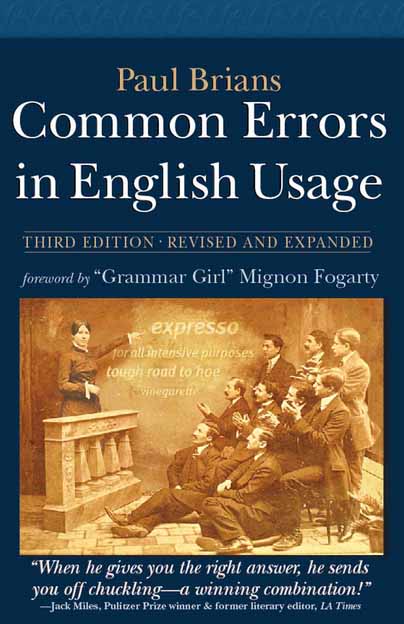
Common Errors in English Usage book cover
  • Share on Twitter
  • Share on FaceBook
  • Share on Linkedin
  • share with email
  • share with link
By yanira.vargas
Categories: Common Error
Washington State University
© Washington State University 2026
  • Access
  • Policies
  • MyWSU
  • Follow WSU