Skip to site navigation Skip to site navigation Skip to content
  • Washington State University
Common Errors in English Usage and More The Web Site of Professor Paul Brians Common Errors in English Usage and More
Give
  • Home
  • Common Errors in English Usage
    • List of Common Errors
    • Videos Created by NBC Based on This Web Site
    • Commonly Made Suggestions
    • More Errors (Eggcorns)
    • Non-errors
    • Other Commonly Misspelled Words
    • Common Errors: The Book
    • Common Errors: The Podcast
  • Science Fiction-Related Materials
  • Nuclear War-Related Materials
  • Bibliographies & Filmographies
    • Nuke Pop: Popular Culture Images
  • Study Materials
  • Paul Brians' Photos
  • Humor & Miscellany
  • The Chernobyl Poems
  • Archives
    • Nuclear Texts and Contexts Newsletter Archives
  • Home
  • Common Errors in English Usage
    • List of Common Errors
    • Videos Created by NBC Based on This Web Site
    • Commonly Made Suggestions
    • More Errors (Eggcorns)
    • Non-errors
    • Other Commonly Misspelled Words
    • Common Errors: The Book
    • Common Errors: The Podcast
  • Science Fiction-Related Materials
  • Nuclear War-Related Materials
  • Bibliographies & Filmographies
    • Nuke Pop: Popular Culture Images
  • Study Materials
  • Paul Brians' Photos
  • Humor & Miscellany
  • The Chernobyl Poems
  • Archives
    • Nuclear Texts and Contexts Newsletter Archives

plus / add

May 30, 2016

Some people continue a pattern picked up in childhood of using “plus” as a verb to mean “add,” as in “You plus the 3 and the 4 and you get 7.” “Plus” is not a verb; use ”add” instead.
Back to list of errors

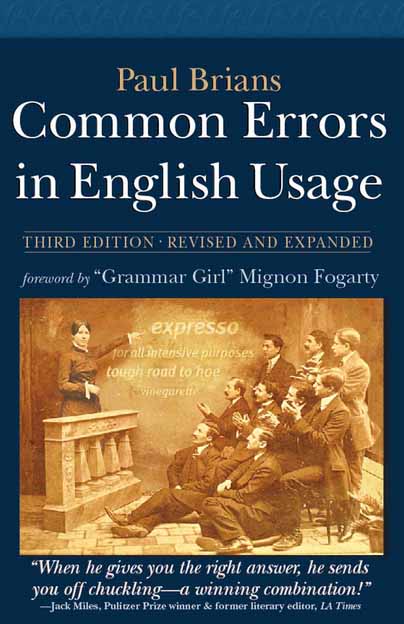
Common Errors in English Usage book cover
  • Share on Twitter
  • Share on FaceBook
  • Share on Linkedin
  • share with email
  • share with link
By yanira.vargas
Categories: Common Error
Washington State University
© Washington State University 2026
  • Access
  • Policies
  • MyWSU
  • Follow WSU